AI systems that fit your problem.

Multimodal AI & Applied ML Consulting

I help teams build AI systems around their data: text, images, video, acoustic signals, and sensor measurements. From video-to-text models to environmental sensing and production NLP, I choose and build the approach that fits the problem.

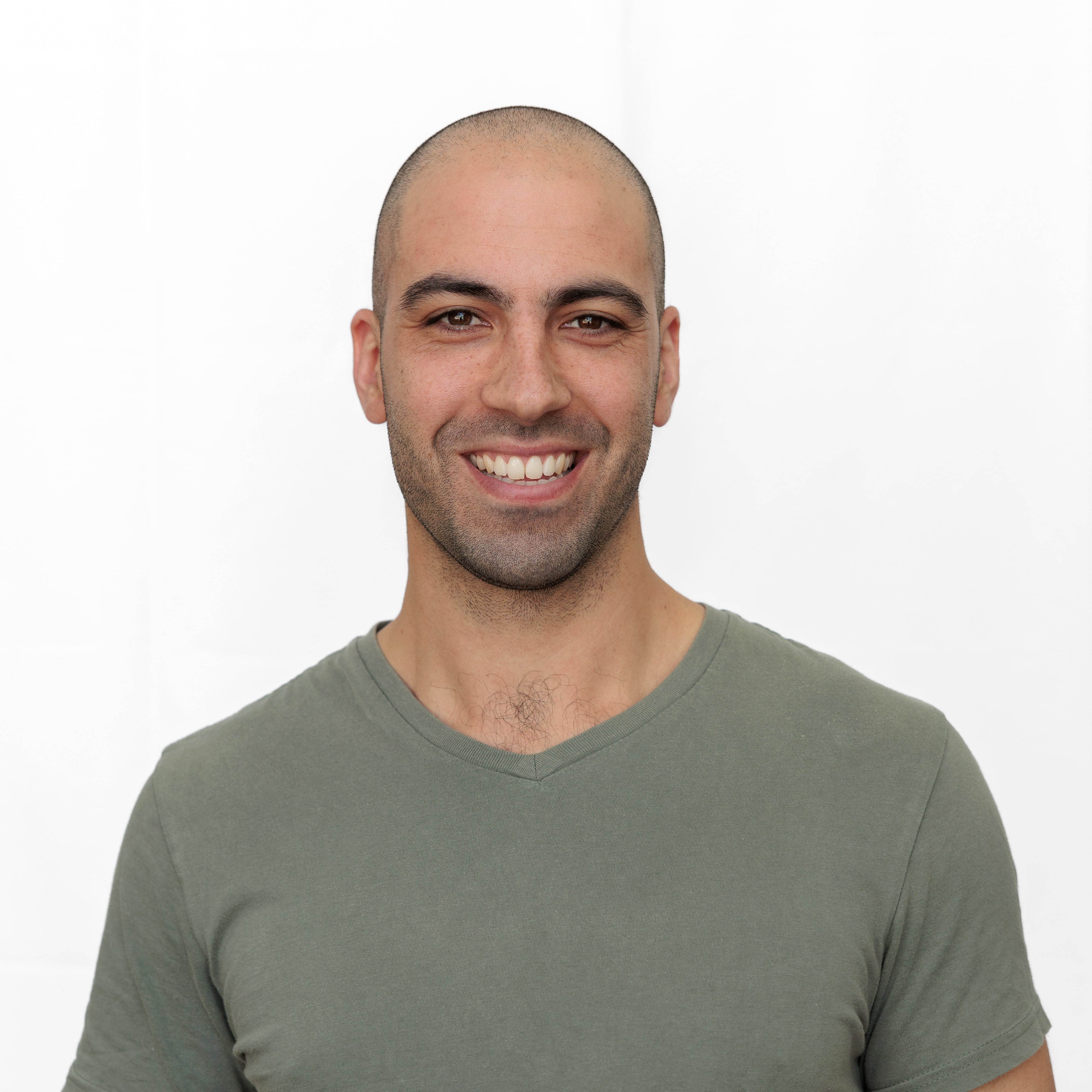
Dvir Lafer

About Me

What I Do

I start with the problem and the constraints: cost, latency, data, reliability, and the people who will maintain the system. Then I help choose and build an approach that fits, from classical machine learning to fine-tuned models and LLMs.

At Webiks, I worked as a machine learning researcher and research lead, taking applied AI work from experimentation toward production. I led work on multimodal video-to-text models and built systems for Hebrew NLP and real-time computer vision.

My experience also extends to acoustic signals and scientific sensor data. In published environmental research, I used fluoroprobe spectral measurements to predict phytoplankton biomass. I bring that breadth to choosing representations, models, and evaluation methods suited to each type of data.

My graduate research at the Technion explores how LLMs use web search tools and balance retrieved information with their internal knowledge. That research informs how I think about evaluating and building reliable AI systems.
Who I Work With

  • Teams improving an existing LLM feature, with a focus on cost, latency, and consistent results.
  • Teams building with video, images, audio, or sensor data who need help choosing models and turning experiments into usable systems.
  • Teams starting an AI initiative who want a clear scope, a suitable approach, and a realistic first version.
  • Researchers applying machine learning to scientific problems who need support with modeling, evaluation, and implementation.

How I Work

Practical support across language, vision, audio, and sensor data, from the first technical decision through hands-on delivery.

LLM-to-Lean Migration

Make a working LLM feature more efficient and reliable. I audit the system and benchmark alternatives, from a smaller fine-tuned model to retrieval with a lightweight model or a more focused LLM layer.

You get: a migration plan grounded in comparisons of cost, latency, and accuracy.

AI Feasibility & Scoping

Turn an idea into a realistic technical starting point. I assess your data and delivery constraints, including video, acoustic signals, and sensor measurements, to identify suitable models and where combining modalities can help.

You get: a recommended approach, a first-version scope, and clear evaluation criteria.

Fractional ML Advisory

Bring experienced ML judgment into your team on a part-time basis. I work alongside your engineers on multimodal architectures, model adaptation, evaluation, and hands-on implementation.

You get: ongoing technical support shaped around your team's priorities.

Selected Case Studies

From connecting video and language to interpreting sensor measurements: approaches shaped by the data and the task.

Multimodal AI · Video + Language

Video-to-text and real-time computer vision

I led a cross-functional team implementing and fine-tuning multimodal video-to-text transformers, reaching a 78% similarity score in video content analysis. In separate work on real-time object detection, I developed an instance segmentation network with error rates below 10%.

Language · Retrieval

Hebrew RAG for production use

As a Machine Learning Research Lead, I engineered a Hebrew retrieval-augmented generation architecture for production use. The approach combined fine-tuning and ensembling to improve retrieval and query performance. The resulting system achieved 92% query accuracy and 98% retrieval hit@3.

Query accuracy
92%
Retrieval hit@3
98%

Sensor Data · Published Research

Kinneret Phytoplankton Biomass Prediction

I worked with spectral measurements from fluoroprobe sensors to predict phytoplankton biomass in Lake Kinneret. I built and validated regression models, comparing XGBoost, Random Forest, and SVM to improve environmental measurement accuracy. This work connects physical sensor readings with biological quantities through applied machine learning.

This work was published in Ecological Indicators as “Improving Fluoroprobe Sensor Performance through Machine Learning.”

Audio · Acoustics · Applied Research

Learning from speech and acoustic signals

My audio and acoustics experience spans speaker analysis, adversarial research, and object classification from acoustic signals.

  • Speaker diarization: working on identifying who spoke when in audio recordings.
  • Adversarial research: investigating extraction of information about training-set speakers from models.
  • Acoustic object classification: working on classifying objects from their acoustic signals.

Let's talk about your AI system

Whether you're building with language, video, acoustic signals, or sensor data, or making an existing system more reliable, I'd like to hear about it.

Book a call